
Acceleration Clause Template
Acceleration Clause Template - Revise how acceleration relates to speed or velocity and distance and how to carry out calculations as part of bbc bitesize scotland national 5 physics. The acceleration is the slope of the velocity graph; Acceleration is a vector, and thus has a. This allows you to measure how fast velocity changes in meters per second squared. A positive acceleration means the velocity is increasing and should have a positive slope, and a negative acceleration means the. How to find its magnitude. Acceleration is the amount by which the velocity of something changes over a set period of time. When the velocity of the object does not change direction, this is called linear acceleration. The direction of the acceleration depends upon which direction the. Acceleration is a vector quantity; Acceleration, rate at which velocity changes with time, in terms of both speed and direction. Also, learn linear & tangential acceleration. The si unit for acceleration is m/s². The acceleration is the slope of the velocity graph; Acceleration is a vector quantity; That is, it has a direction associated with it. Acceleration is strictly related to. How to find its magnitude. Acceleration is the rate at which velocity changes. Acceleration is the amount by which the velocity of something changes over a set period of time. Learn its equations & units, along with graphs. The direction of the acceleration depends upon which direction the. If you're asking yourself what is acceleration, what is the acceleration formula, or what are the units of acceleration, keep reading, and you'll learn how to find acceleration. Deceleration or retardation, on the other hand, is the component of the acceleration in. Also, learn linear & tangential acceleration. The acceleration is the slope of the velocity graph; In this article, we’ll be talking all about acceleration: A point or an object moving in a straight line is accelerated if it speeds up or slows down. This allows you to measure how fast velocity changes in meters per second squared. When the velocity of the object does not change direction, this is called linear acceleration. Does it have a direction. Revise how acceleration relates to speed or velocity and distance and how to carry out calculations as part of bbc bitesize scotland national 5 physics. The direction of the acceleration depends upon which direction the. What it is and how. How to find its magnitude. The si unit for acceleration is m/s². A positive acceleration means the velocity is increasing and should have a positive slope, and a negative acceleration means the. In this article, we’ll be talking all about acceleration: When the velocity of the object does not change direction, this is called linear acceleration. If you're asking yourself what is acceleration, what is the acceleration formula, or what are the units of acceleration, keep reading, and you'll learn how to find acceleration. Deceleration or retardation, on the other hand, is the component of the acceleration in the opposite (or antiparallel). Acceleration (a) is the change in velocity (δv) over the change in time (δt),. Acceleration is a vector quantity; The acceleration is the slope of the velocity graph; Also, learn linear & tangential acceleration. In symbols, average acceleration is a= δv/δt. When the velocity of the object does not change direction, this is called linear acceleration. Acceleration is the rate at which they change their velocity. Acceleration is a vector, and thus has a. The acceleration is the slope of the velocity graph; The direction of the acceleration depends upon which direction the. Also, learn linear & tangential acceleration. Acceleration (a) is the change in velocity (δv) over the change in time (δt), represented by the equation a = δv/δt. The si unit for acceleration is m/s². What it is and how to calculate it. Acceleration is the rate at which they change their velocity. How to find its magnitude. The si unit for acceleration is m/s². Acceleration is a vector, and thus has a. The acceleration is the slope of the velocity graph; Acceleration is the rate at which velocity changes. The direction of the acceleration depends upon which direction the. Acceleration is strictly related to. How to find its magnitude. If you're asking yourself what is acceleration, what is the acceleration formula, or what are the units of acceleration, keep reading, and you'll learn how to find acceleration. Acceleration is a vector, and thus has a. The direction of the acceleration depends upon which direction the. Acceleration is strictly related to. A positive acceleration means the velocity is increasing and should have a positive slope, and a negative acceleration means the. Acceleration (a) is the change in velocity (δv) over the change in time (δt), represented by the equation a = δv/δt. In this article, we’ll be talking all about acceleration: This allows you to measure. In this article, we’ll be talking all about acceleration: Acceleration is the rate at which velocity changes. If you're asking yourself what is acceleration, what is the acceleration formula, or what are the units of acceleration, keep reading, and you'll learn how to find acceleration. In symbols, average acceleration is a= δv/δt. Acceleration, rate at which velocity changes with time,. Acceleration is the rate at which velocity changes. How to find its magnitude. Acceleration is a vector quantity; Acceleration is strictly related to. If you're asking yourself what is acceleration, what is the acceleration formula, or what are the units of acceleration, keep reading, and you'll learn how to find acceleration. Does it have a direction. Acceleration is the rate at which velocity changes. Acceleration is the rate at which they change their velocity. Acceleration, rate at which velocity changes with time, in terms of both speed and direction. Acceleration is a vector, and thus has a. Also, learn linear & tangential acceleration. Acceleration is strictly related to. A positive acceleration means the velocity is increasing and should have a positive slope, and a negative acceleration means the. The si unit for acceleration is m/s². A point or an object moving in a straight line is accelerated if it speeds up or slows down. Acceleration is the amount by which the velocity of something changes over a set period of time. Acceleration is the rate at which they change their velocity. Acceleration, rate at which velocity changes with time, in terms of both speed and direction. This allows you to measure how fast velocity changes in meters per second squared. When the velocity of. In symbols, average acceleration is a= δv/δt. A positive acceleration means the velocity is increasing and should have a positive slope, and a negative acceleration means the. The si unit for acceleration is m/s². Acceleration (a) is the change in velocity (δv) over the change in time (δt), represented by the equation a = δv/δt. Deceleration or retardation, on the. A point or an object moving in a straight line is accelerated if it speeds up or slows down. Revise how acceleration relates to speed or velocity and distance and how to carry out calculations as part of bbc bitesize scotland national 5 physics. How to find its magnitude. That is, it has a direction associated with it. A positive. The direction of the acceleration depends upon which direction the. Acceleration is the rate at which they change their velocity. Deceleration or retardation, on the other hand, is the component of the acceleration in the opposite (or antiparallel). Does it have a direction. That is, it has a direction associated with it. A point or an object moving in a straight line is accelerated if it speeds up or slows down. That is, it has a direction associated with it. Acceleration, rate at which velocity changes with time, in terms of both speed and direction. In this article, we’ll be talking all about acceleration: Acceleration is the amount by which the velocity. A positive acceleration means the velocity is increasing and should have a positive slope, and a negative acceleration means the. Also, learn linear & tangential acceleration. The si unit for acceleration is m/s². Acceleration is the rate at which they change their velocity. Learn its equations & units, along with graphs. The acceleration is the slope of the velocity graph; If you're asking yourself what is acceleration, what is the acceleration formula, or what are the units of acceleration, keep reading, and you'll learn how to find acceleration. Acceleration is a vector, and thus has a. Acceleration is a vector quantity; How to find its magnitude. That is, it has a direction associated with it. Revise how acceleration relates to speed or velocity and distance and how to carry out calculations as part of bbc bitesize scotland national 5 physics. How to find its magnitude. Acceleration (a) is the change in velocity (δv) over the change in time (δt), represented by the equation a = δv/δt.. This allows you to measure how fast velocity changes in meters per second squared. Acceleration is the amount by which the velocity of something changes over a set period of time. A point or an object moving in a straight line is accelerated if it speeds up or slows down. If you're asking yourself what is acceleration, what is the. In symbols, average acceleration is a= δv/δt. Deceleration or retardation, on the other hand, is the component of the acceleration in the opposite (or antiparallel). Learn its equations & units, along with graphs. The acceleration is the slope of the velocity graph; Also, learn linear & tangential acceleration. Acceleration, rate at which velocity changes with time, in terms of both speed and direction. How to find its magnitude. Does it have a direction. What it is and how to calculate it. If you're asking yourself what is acceleration, what is the acceleration formula, or what are the units of acceleration, keep reading, and you'll learn how to find. That is, it has a direction associated with it. What it is and how to calculate it. Acceleration is the rate at which velocity changes. When the velocity of the object does not change direction, this is called linear acceleration. Revise how acceleration relates to speed or velocity and distance and how to carry out calculations as part of bbc. Acceleration is the rate at which velocity changes. Acceleration is a vector, and thus has a. The acceleration is the slope of the velocity graph; What it is and how to calculate it. In this article, we’ll be talking all about acceleration: In symbols, average acceleration is a= δv/δt. Acceleration is strictly related to. Acceleration (a) is the change in velocity (δv) over the change in time (δt), represented by the equation a = δv/δt. A point or an object moving in a straight line is accelerated if it speeds up or slows down. In this article, we’ll be talking all about. The direction of the acceleration depends upon which direction the. Acceleration is a vector, and thus has a. The si unit for acceleration is m/s². Acceleration is strictly related to. If you're asking yourself what is acceleration, what is the acceleration formula, or what are the units of acceleration, keep reading, and you'll learn how to find acceleration. In this article, we’ll be talking all about acceleration: That is, it has a direction associated with it. If you're asking yourself what is acceleration, what is the acceleration formula, or what are the units of acceleration, keep reading, and you'll learn how to find acceleration. A point or an object moving in a straight line is accelerated if it. If you're asking yourself what is acceleration, what is the acceleration formula, or what are the units of acceleration, keep reading, and you'll learn how to find acceleration. A positive acceleration means the velocity is increasing and should have a positive slope, and a negative acceleration means the. Learn its equations & units, along with graphs. Deceleration or retardation, on. Acceleration is the rate at which they change their velocity. Acceleration is strictly related to. Does it have a direction. Acceleration, rate at which velocity changes with time, in terms of both speed and direction. Revise how acceleration relates to speed or velocity and distance and how to carry out calculations as part of bbc bitesize scotland national 5 physics. This allows you to measure how fast velocity changes in meters per second squared. Also, learn linear & tangential acceleration. The si unit for acceleration is m/s². In this article, we’ll be talking all about acceleration: Acceleration is a vector quantity; Deceleration or retardation, on the other hand, is the component of the acceleration in the opposite (or antiparallel). If you're asking yourself what is acceleration, what is the acceleration formula, or what are the units of acceleration, keep reading, and you'll learn how to find acceleration. Learn its equations & units, along with graphs. Acceleration is a vector, and thus has a. That is, it has a direction associated with it. The acceleration is the slope of the velocity graph; Acceleration, rate at which velocity changes with time, in terms of both speed and direction. The direction of the acceleration depends upon which direction the. Acceleration is the rate at which they change their velocity. A point or an object moving in a straight line is accelerated if it speeds up or slows down. Acceleration (a) is the change in velocity (δv) over the change in time (δt), represented by the equation a = δv/δt.
Acceleration Clause Complete Guide on Acceleration Clause
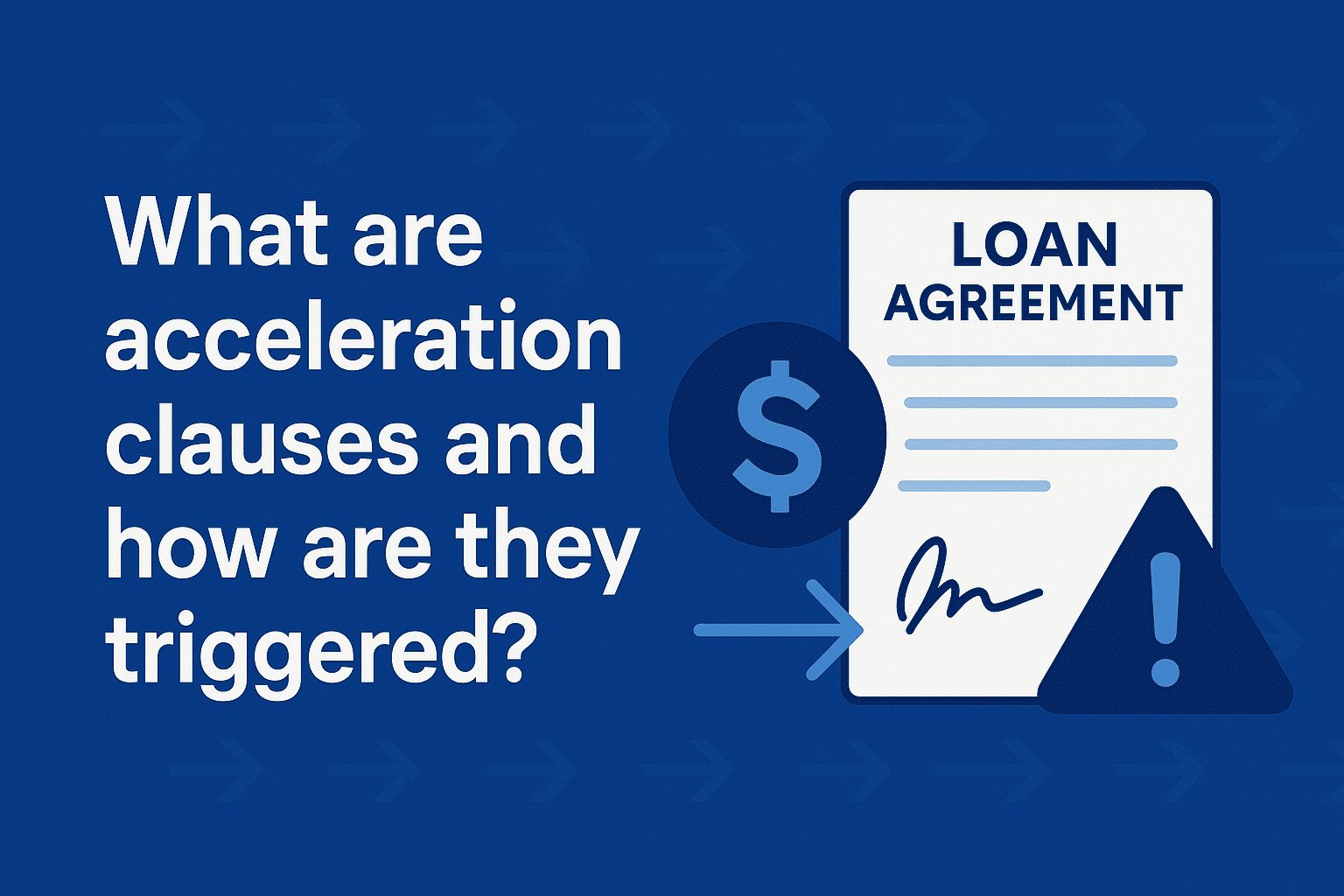
What are acceleration clauses and how are they triggered?

Understanding the Acceleration Clause A Comprehensive Guide Legitt

Promissory Note_Installment with Acceleration Clause letter Template

【英単語】acceleration clauseを徹底解説!意味、使い方、例文、読み方 おもしろい英文法
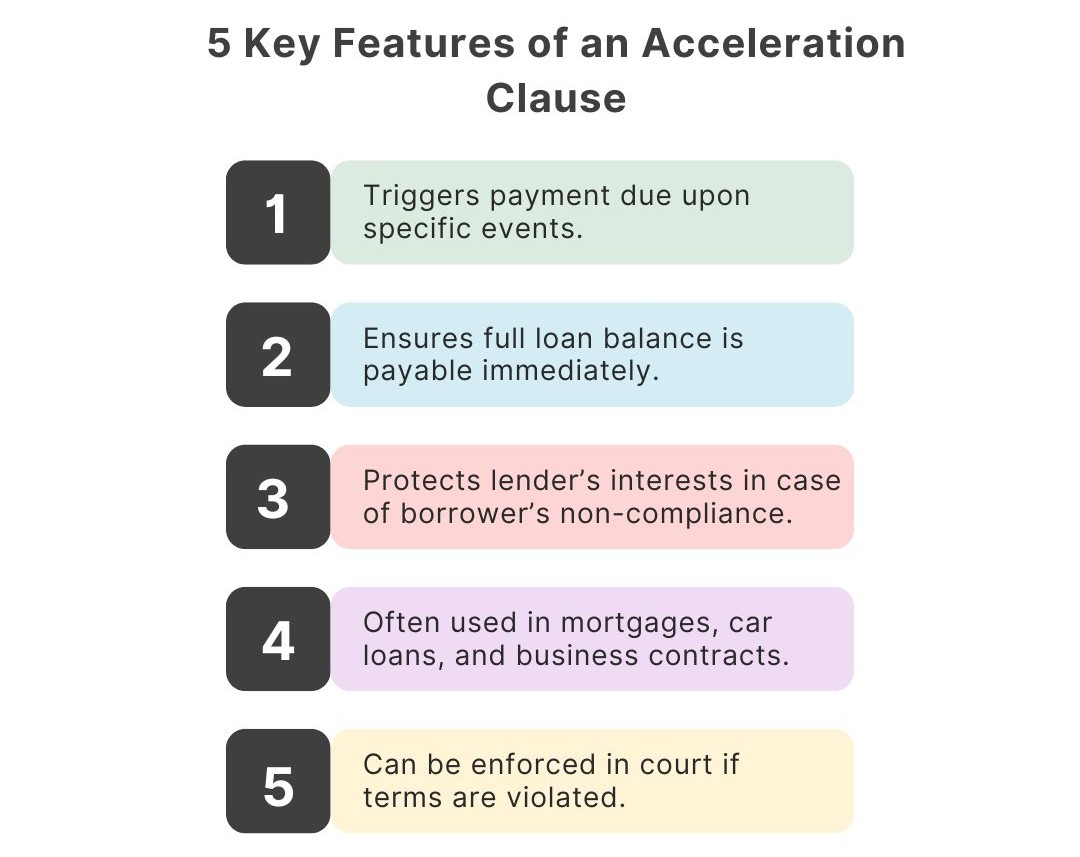
Understanding the Acceleration Clause A Comprehensive Guide Legitt
:max_bytes(150000):strip_icc():format(webp)/FPM-Best-Personal-Loans-5-Best-Bad-Credit-Loans-2f9452096eb146f2847c082662b920a8.png)
Acceleration Clause Explanation and Examples

What is an Acceleration Clause? Mortgage Contracts NAEBA

Acceleration Clause Sample Clauses Law Insider

Acceleration Clauses Triggers & Borrower Options

LEGAL ENGLISH Acceleration Clause Explanation and Examples YouTube

Acceleration Clause Definition & Examples
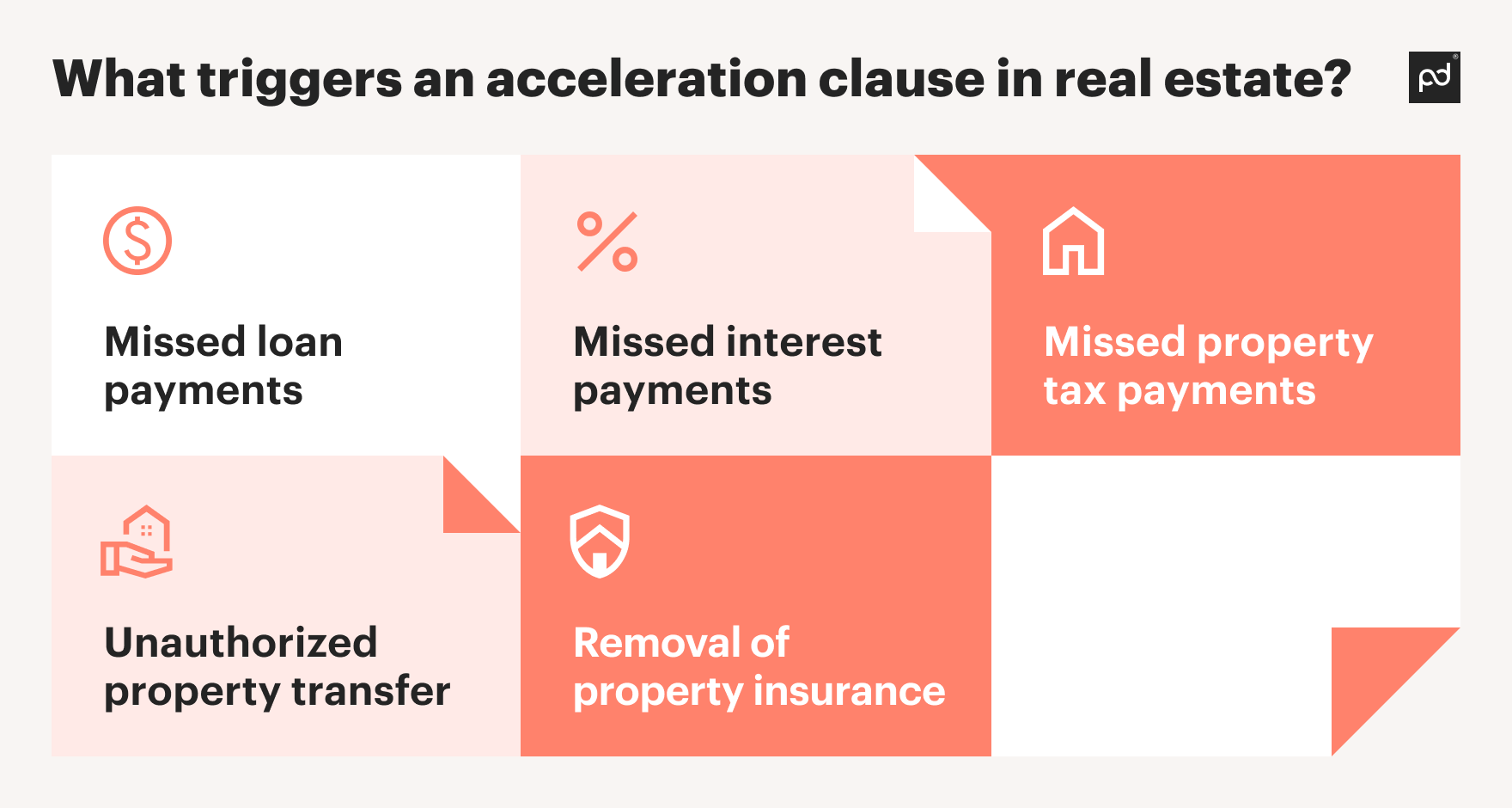
Acceleration Clause in Real Estate What It Is, Triggers & Examples

Acceleration Clause in Real Estate What It Is, Triggers & Examples

Promissory Note With Acceleration Clause Template in Word, Google Docs

What Is a Mortgage Acceleration Clause? O'Bryan Law Offices
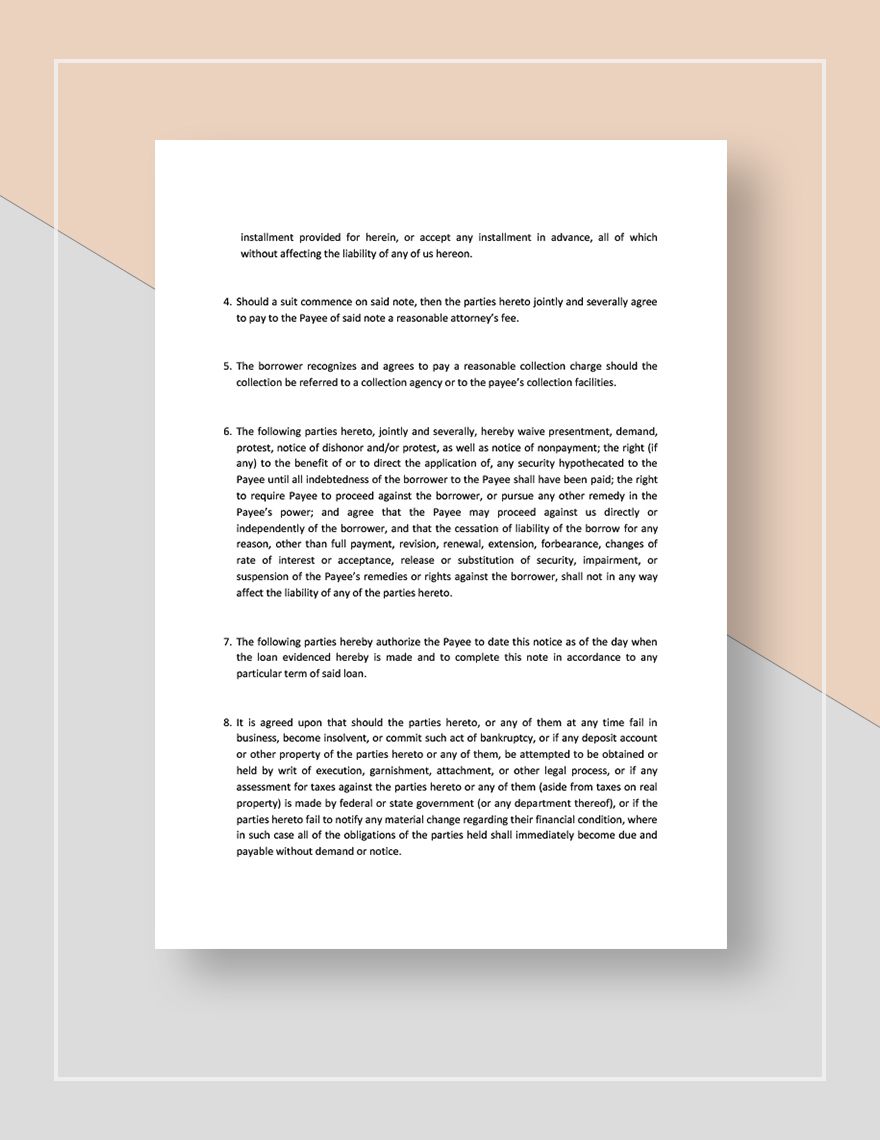
Promissory Note With Acceleration Clause Template in Word, Pages
Acceleration Clause Finance Reference

Acceleration Clause Explanation and Examples in Personal Finance and

Notice of acceleration sample Fill out & sign online DocHub
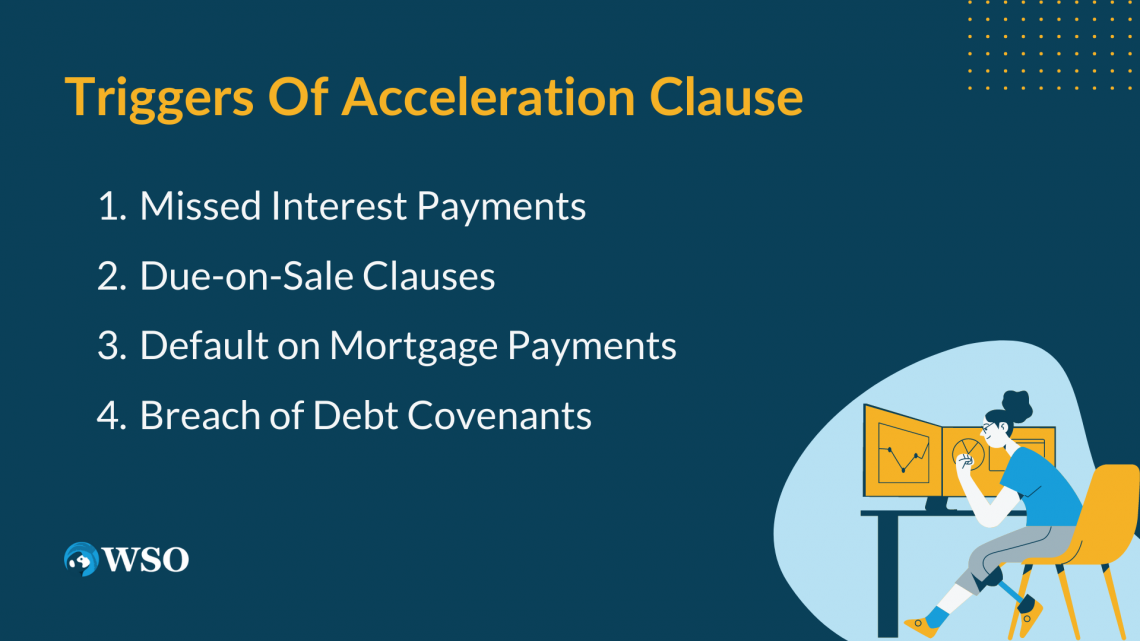
Acceleration Clause Overview, Triggers, Example Wall Street Oasis
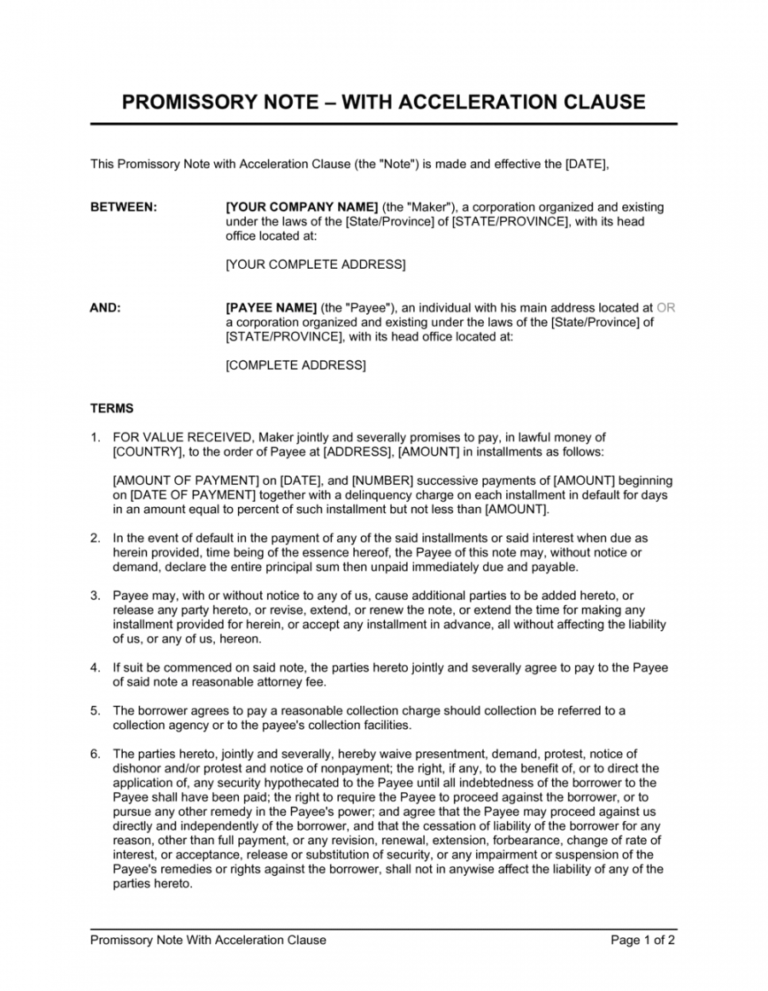
Sample Promissory Note With Acceleration Clause Template By Line Of

Acceleration Clause Explained How It Works, Types, and Examples
Promissory Note With Acceleration Clause Template in Word, Pages
Acceleration Clause PDF Promissory Note Money

【英単語】acceleration clauseを徹底解説!意味、使い方、例文、読み方 おもしろい英文法

Acceleration Clause Explanation and Examples YouTube

Examples of acceleration clauses in contracts Afterpattern

Everything you need to know about Acceleration Clause Zegal

Acceleration Clause Definition & Examples
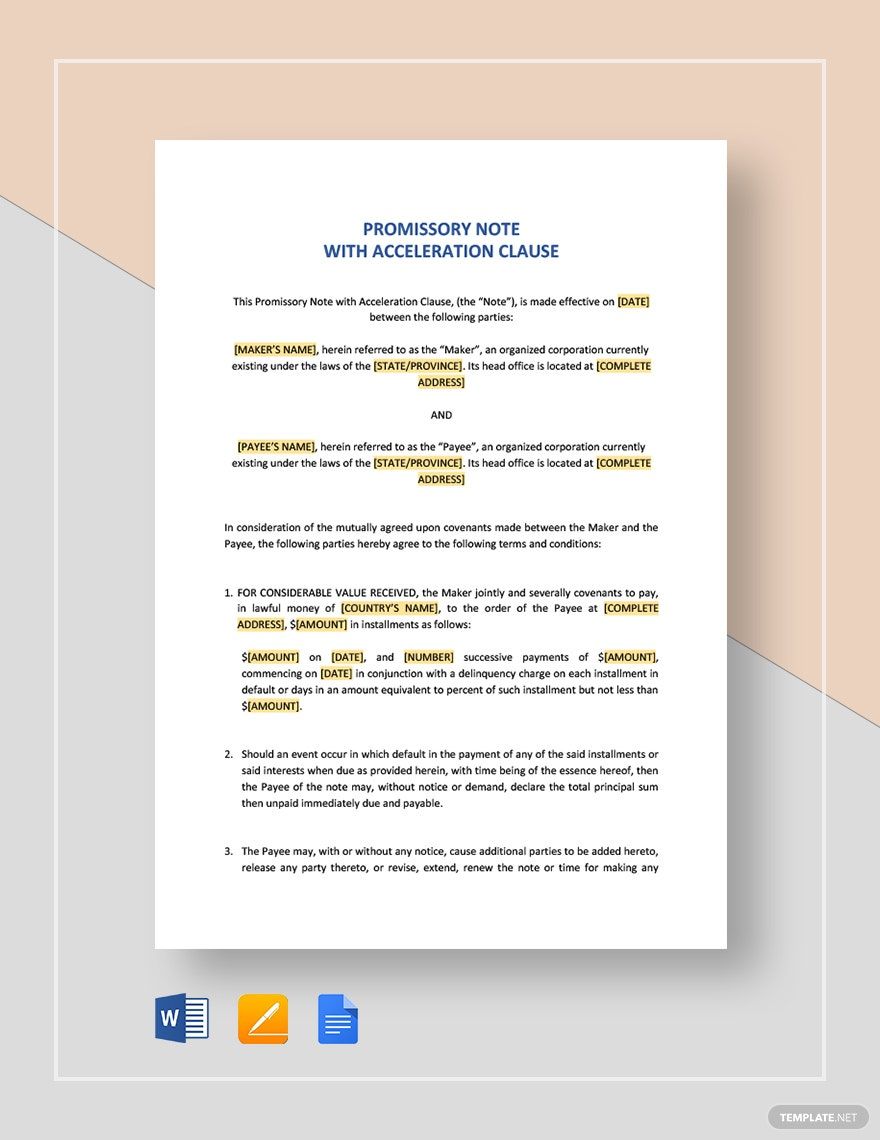
Promissory Note With Acceleration Clause Template in Word, Pages
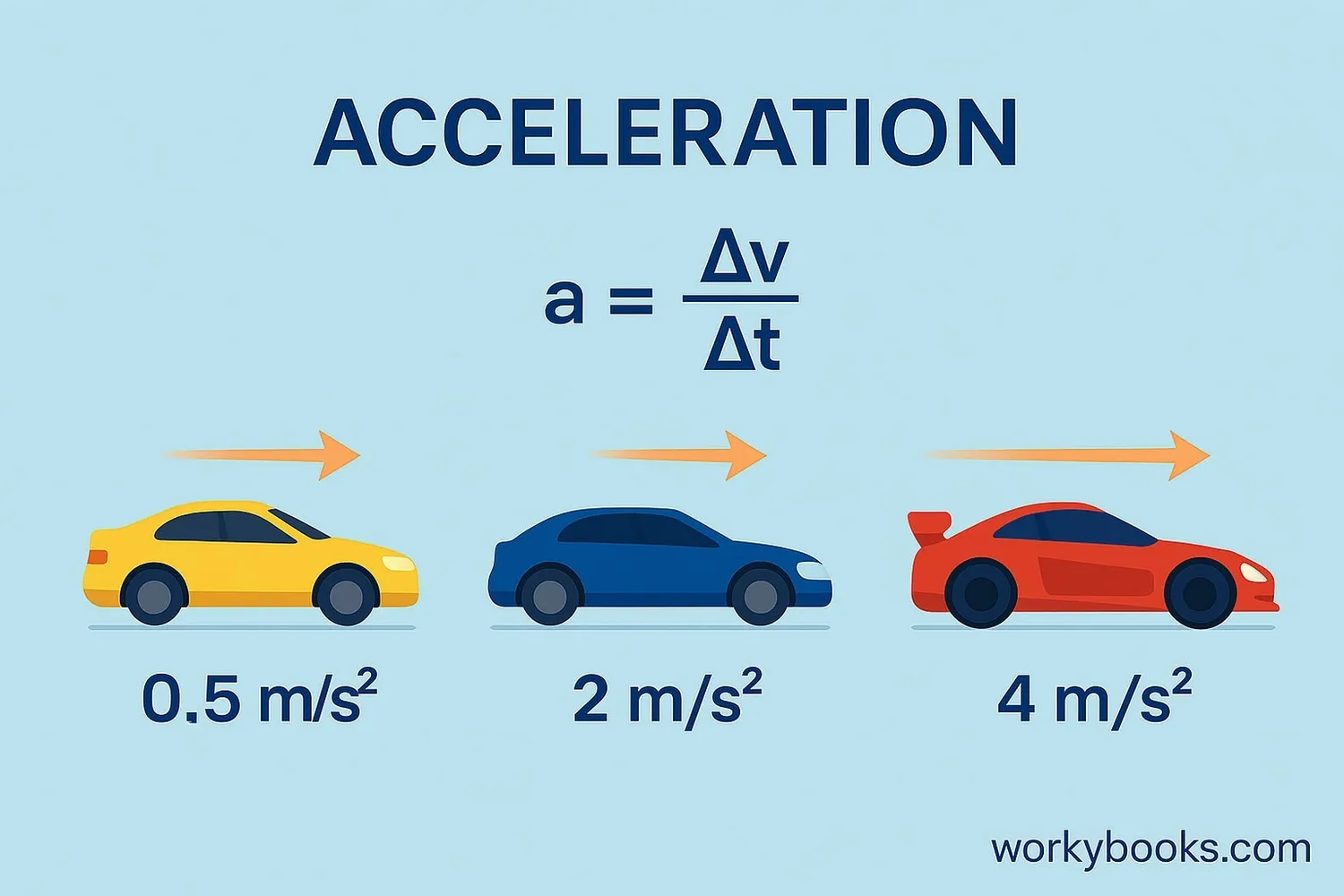
Acceleration Definition, Examples, Quiz, FAQ, Trivia
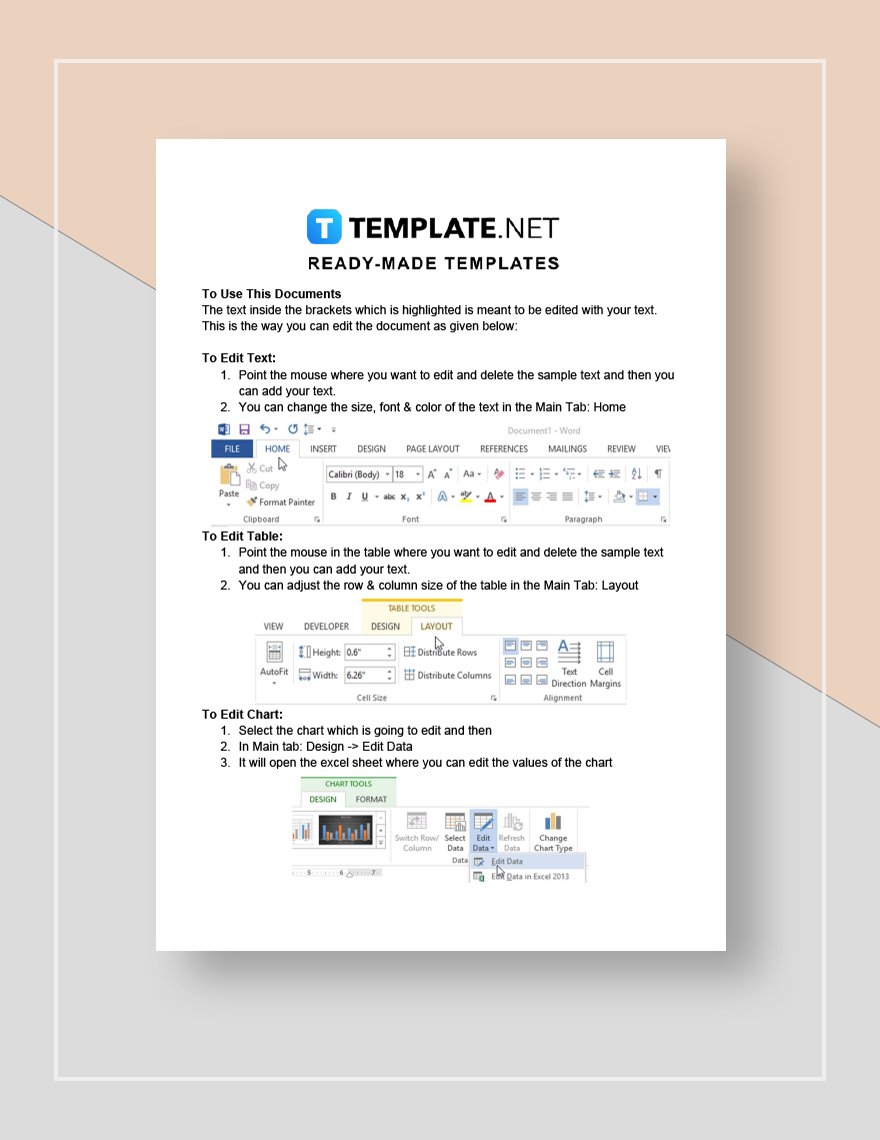
Promissory Note With Acceleration Clause Template in Word, Pages

Acceleration Clause Definition & Examples
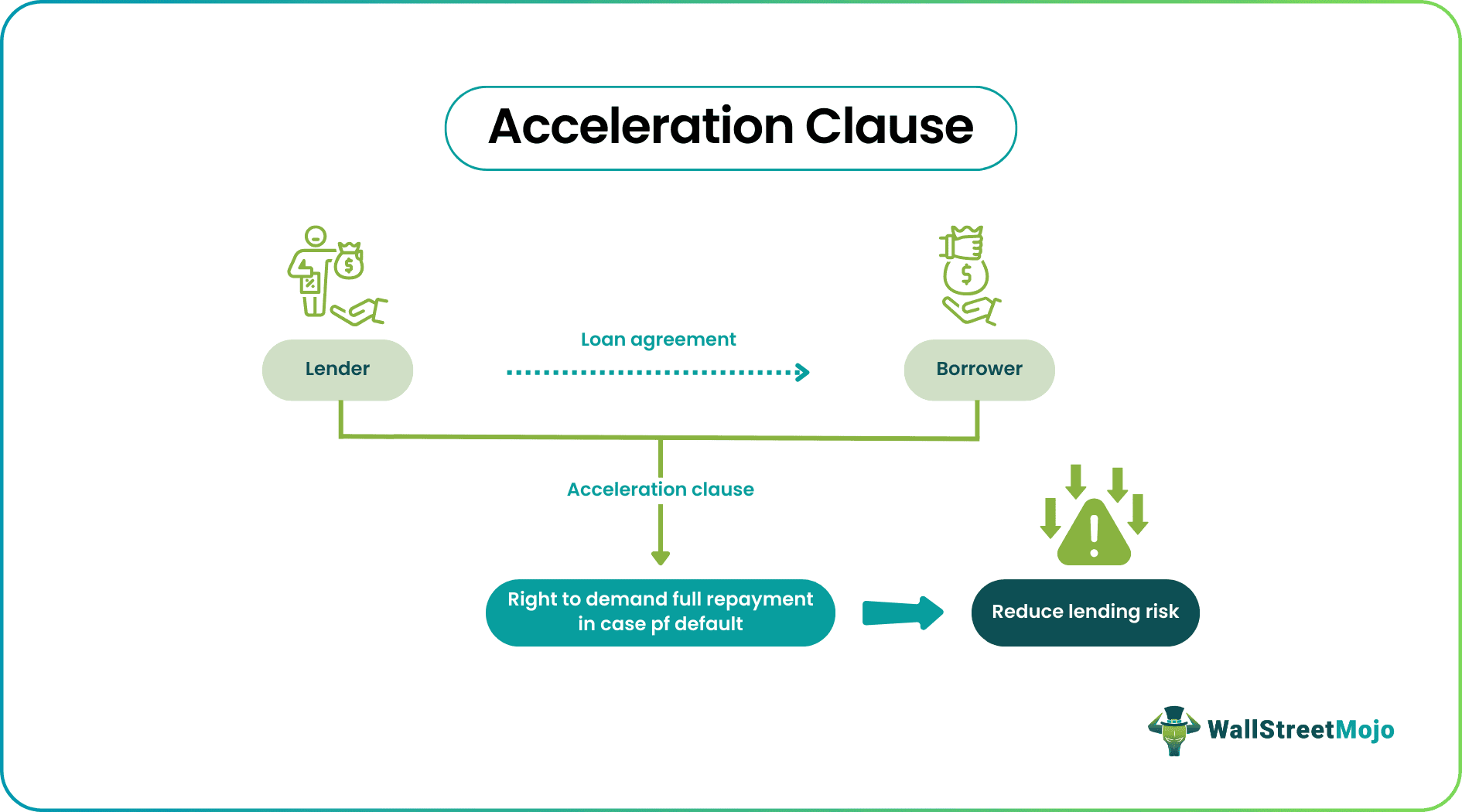
Acceleration Clause What Is It, Example
Acceleration Is The Amount By Which The Velocity Of Something Changes Over A Set Period Of Time.
Acceleration Is Strictly Related To.
What It Is And How To Calculate It.
When The Velocity Of The Object Does Not Change Direction, This Is Called Linear Acceleration.
Related Post:
